When the sun comes out on a Saturday, West Hollywood awakens. Storefronts swing open, welcoming friends and foot traffic alike. Cafés fill with coffee and conversation. Motors rev along Sunset in symphonies of sports mode and steel. And our usual commutes become weekend joyrides.
Driving down my favorite street in the city, I braked at the sight of red lights and orange traffic cones. The start of the Strip was blocked off entirely, with construction trucks crowding the road and workers in hard hats swarming the intersection.
I pulled closer and asked one of the men in neon why the road was closed. “A water main burst in the middle of the night. Flooded the whole damn neighborhood and opened up a sinkhole in the street!” he shouted. “Road’s closed until further notice. Follow the signs and take a detour!”
As I turned onto a side street, I passed Dialog, my favorite café and weekend ritual, where I had planned to pick up juices for Lauren and me. Peering through my car window, I saw a sheet of white paper taped to the front door. The patio had been stripped of its tables and chairs, and behind the glass, the café sat dark. The flood had reached Dialog, too, turning one of my neighborhood’s liveliest corners strangely quiet.
I pulled over and consulted everyone’s number-one news source these days: Instagram. Todd, Dialog’s owner, had posted a note confirming that the local gem would remain closed for the time being. The clean typography couldn’t disguise his disappointment — or everyone else’s. Below it, the comments section flooded with messages of sadness, support, and love.
The closure had interrupted the neighborhood’s routine, but it also revealed how deeply that routine mattered. In the absence of their usual Saturday coffee, people found another way to gather — this time in the comments, saying aloud what ordinary days had left unspoken. It seemed that only once the doors closed did everyone feel compelled to open up about how much the place meant to them.
Multiple detours later, I made it to Lauren and Ariel’s house. Our doors have always been open to each other, ever since my friendship with Lauren began three decades ago — from the condo building where we once lived with our parents to the homes we now call our own. And as grown-ups, weekend pool time has become something of a tradition.
With the juices from Dialog no longer an option, we did what any logical people would do under the circumstances: we made Aperol spritzes and carried them outside.
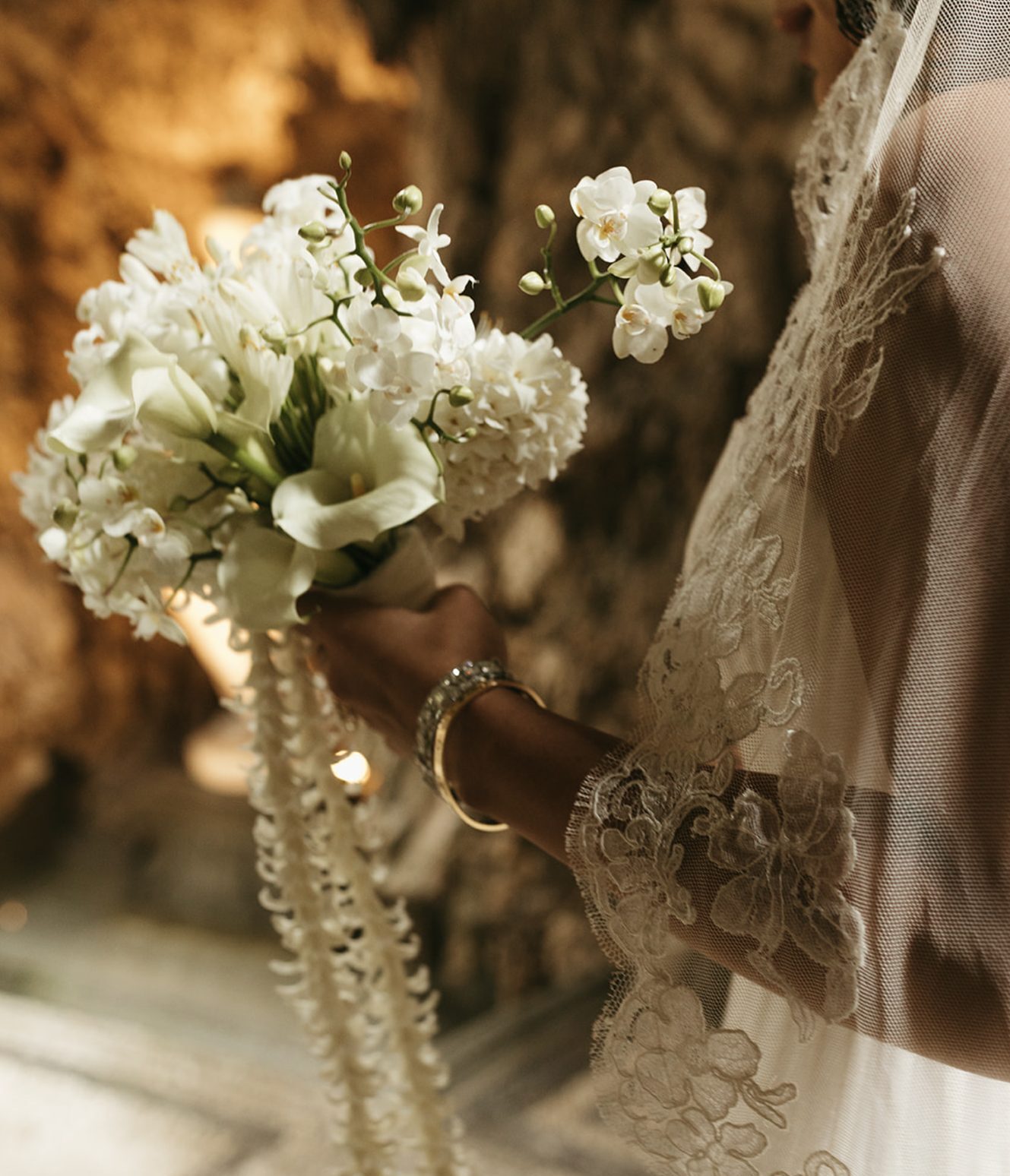
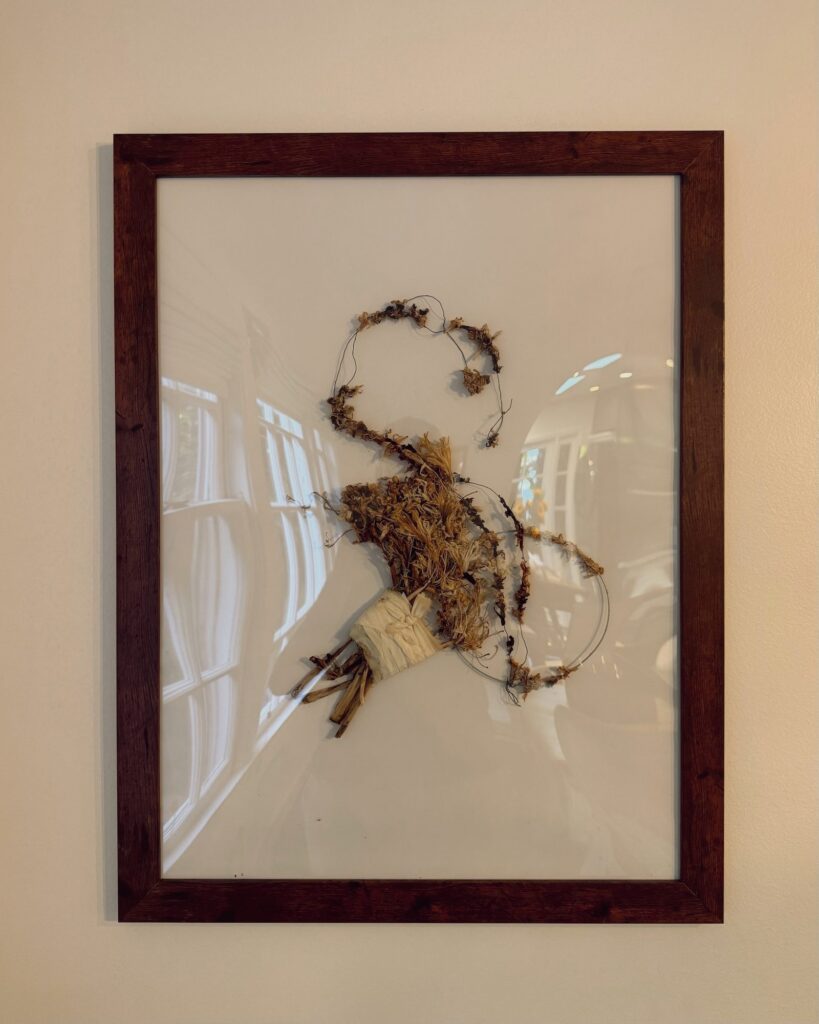
On my way to the backyard, I walked through the dining room and noticed a new piece of art hanging on the wall. It was Lauren’s wedding bouquet from just a few months ago — a bundle of white orchids she held the day she and Ariel got married in Italy, now dried against a white backdrop.
Ariel had framed the flowers behind glass so they could live on beyond the day itself. The petals had browned and curled inward, and pieces of string still showed between the stems — holding the flowers in the cascading shape they had formed as Lauren carried them down the aisle.
After the wedding, Lauren gave me the bouquet to bring home while she and Ariel continued their travels. I carried it back to Los Angeles in a bag, protecting what remained of the day until I could return it to her. The flowers no longer carried the freshness they had on her wedding day, but in their altered form, they had taken on a different kind of life. Their beauty had evolved, processed by time like a photograph developed in black and white — quieter now, but somehow more enduring.
And suddenly, the day began replaying in my mind, frame by frame, its colors returning.
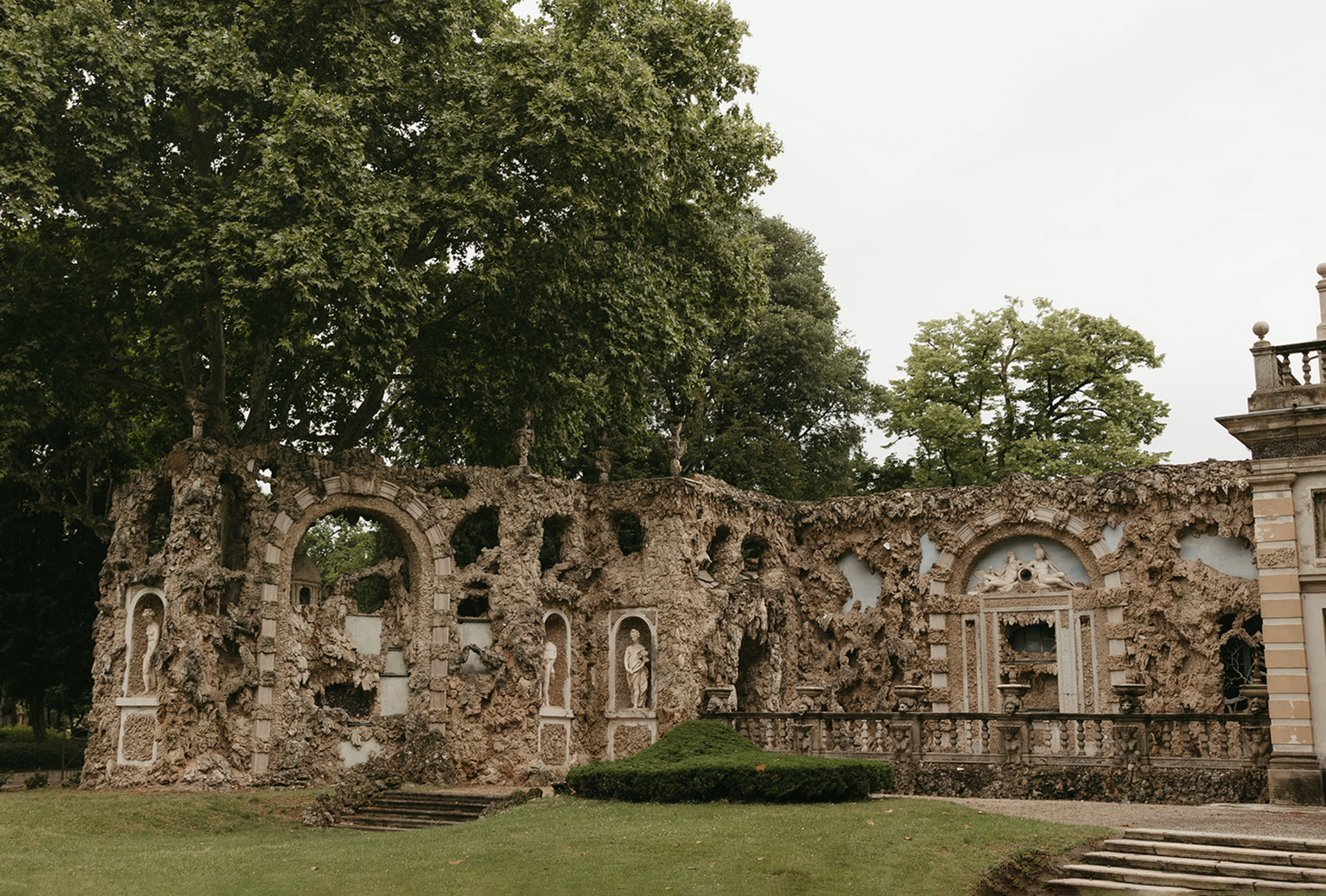
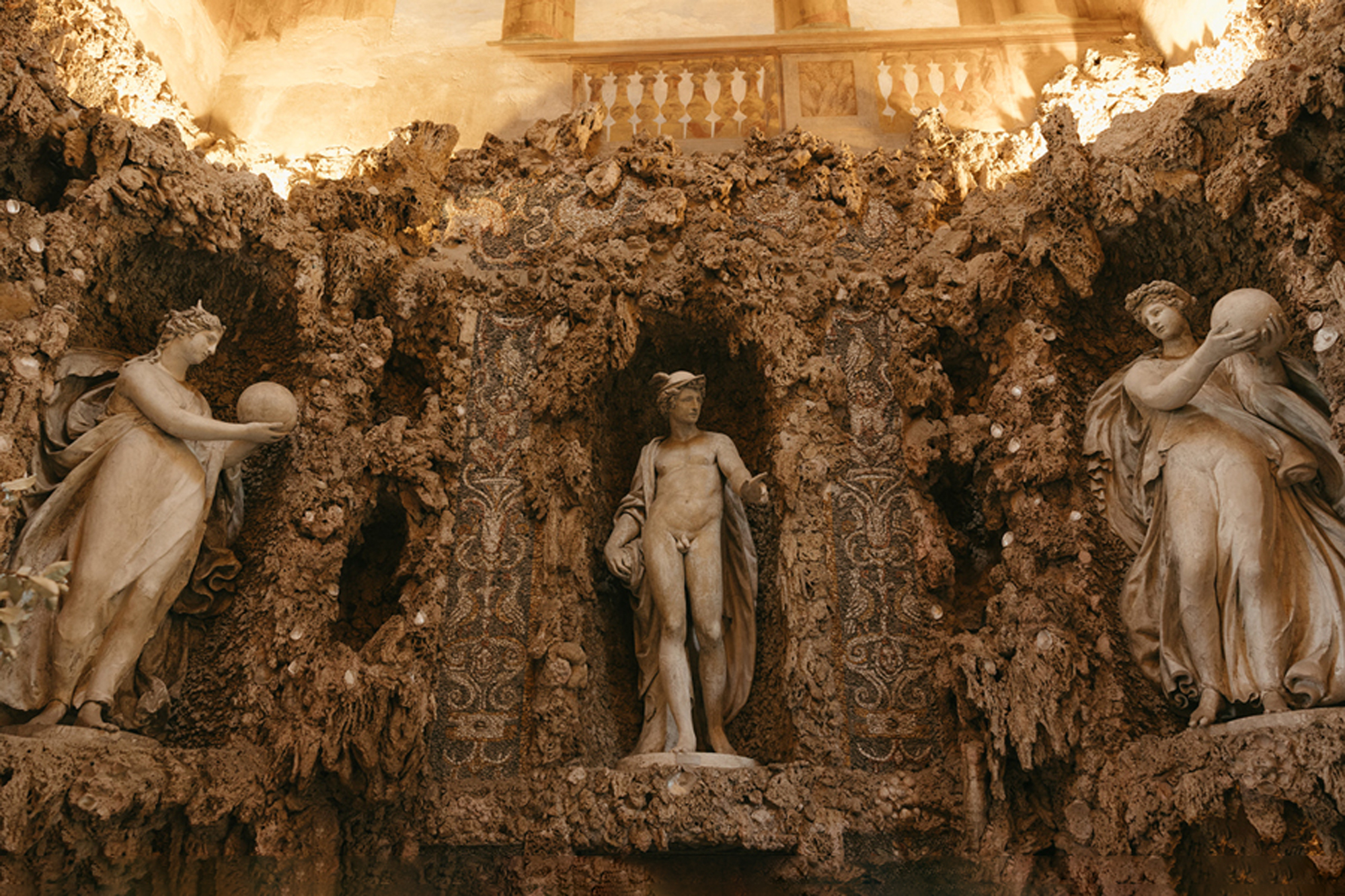
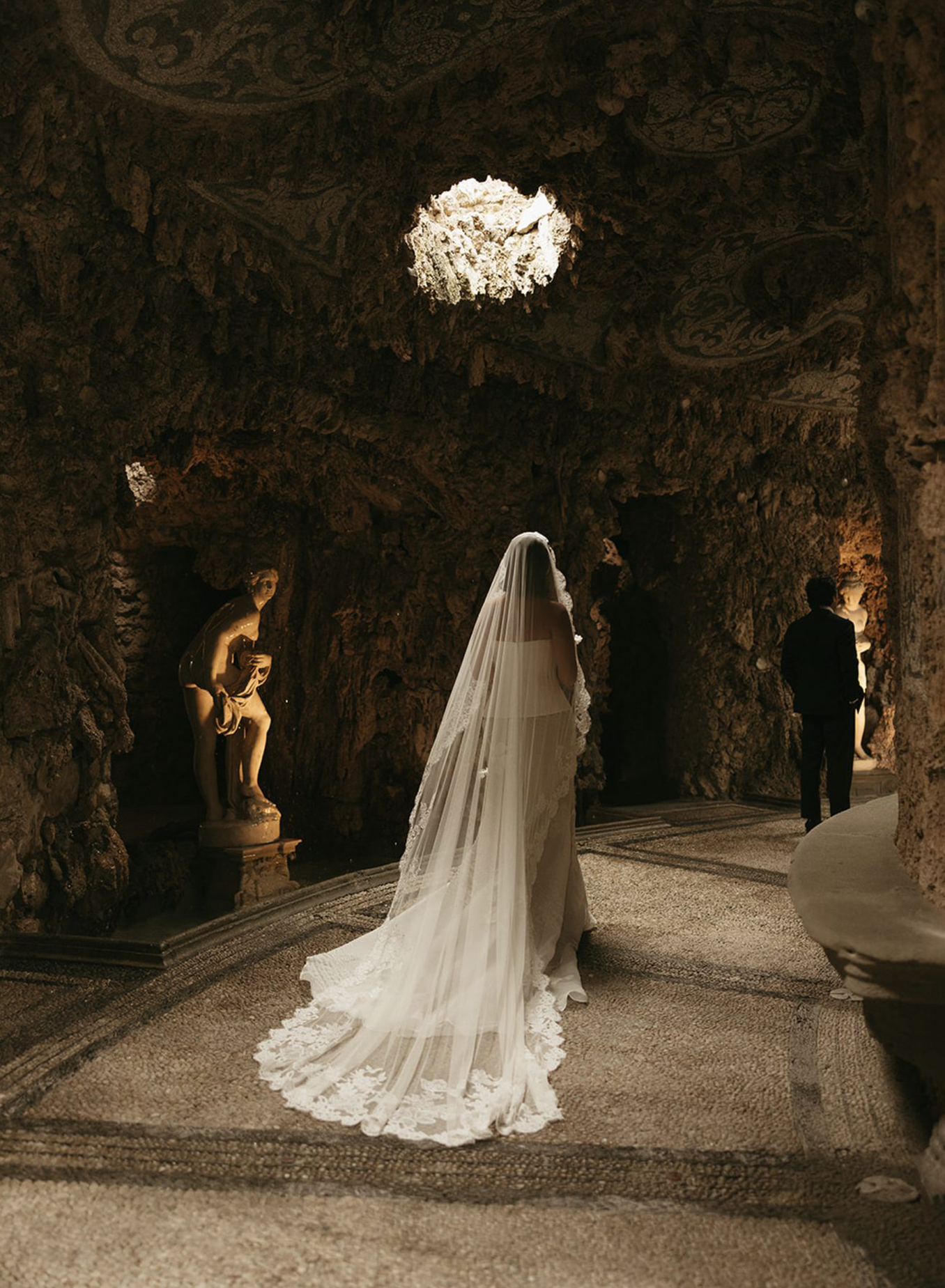
On the morning of the wedding, I had helped Lauren into her dress before we made our way just outside Milan to a centuries-old castle. Beyond its walls sat a cave that had existed for thousands of years, filled with fountains, weathered sculptures, and statues that seemed to have been carried there from another life.
The clouds conspired, and rain began to fall unexpectedly. Left with little choice, Lauren and Ariel reworked their path down the aisle, rearranging parts of the ceremony so we could stay dry — even if our cheeks never stood a chance.
As I walked Lauren outside for photos with her family, I gathered the ivory train of her dress in my hands to keep it from catching in the mud. Large white flowers were embroidered across the skirt, their petals rising from the fabric as though stitched there in permanent bloom.
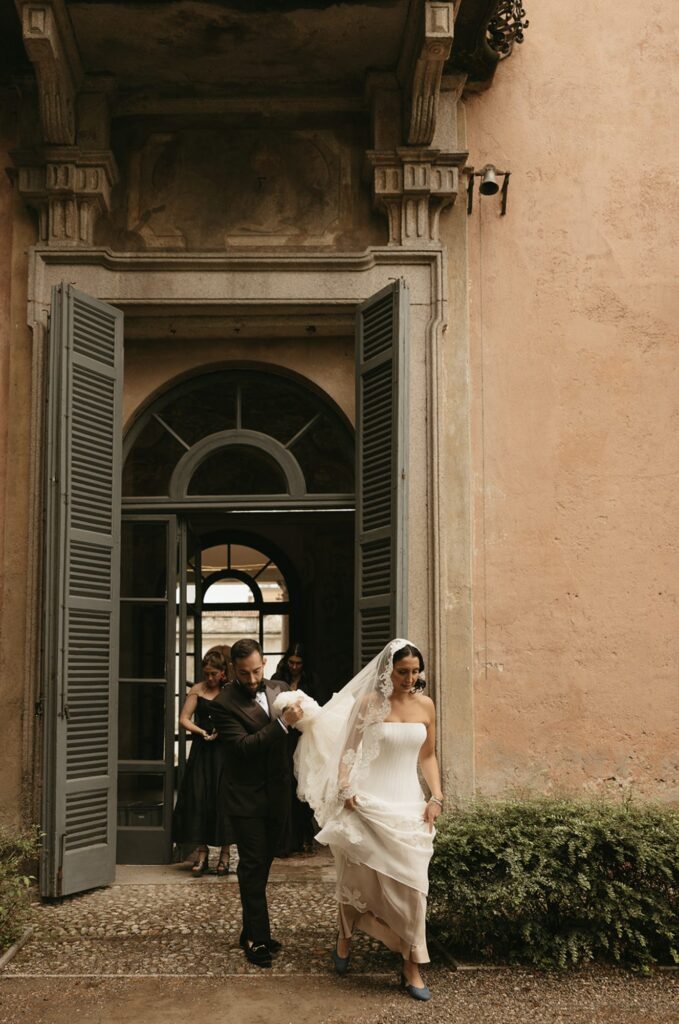
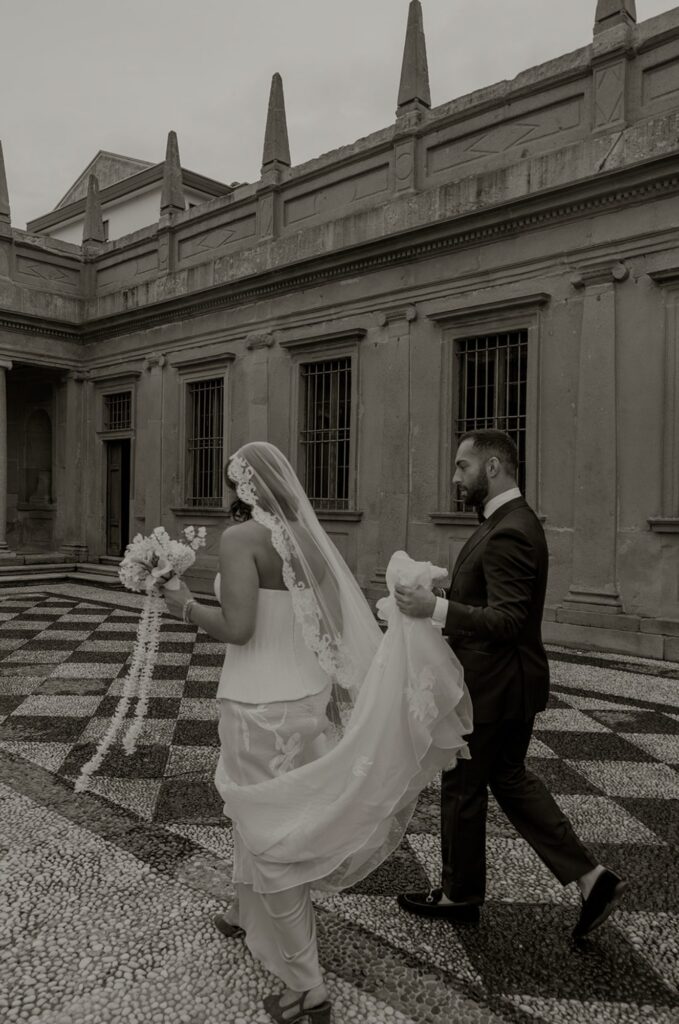
What had first felt like nature’s intrusion on the day began to lend it an atmosphere of its own. Slick with rain, the beige stone of the castle stood against a silver sky, casting everything in a glowing palette of neutrals. It was as though we had stepped into a landscape washed in sepia — except the air was moving, and the day was unfolding around us in real time.
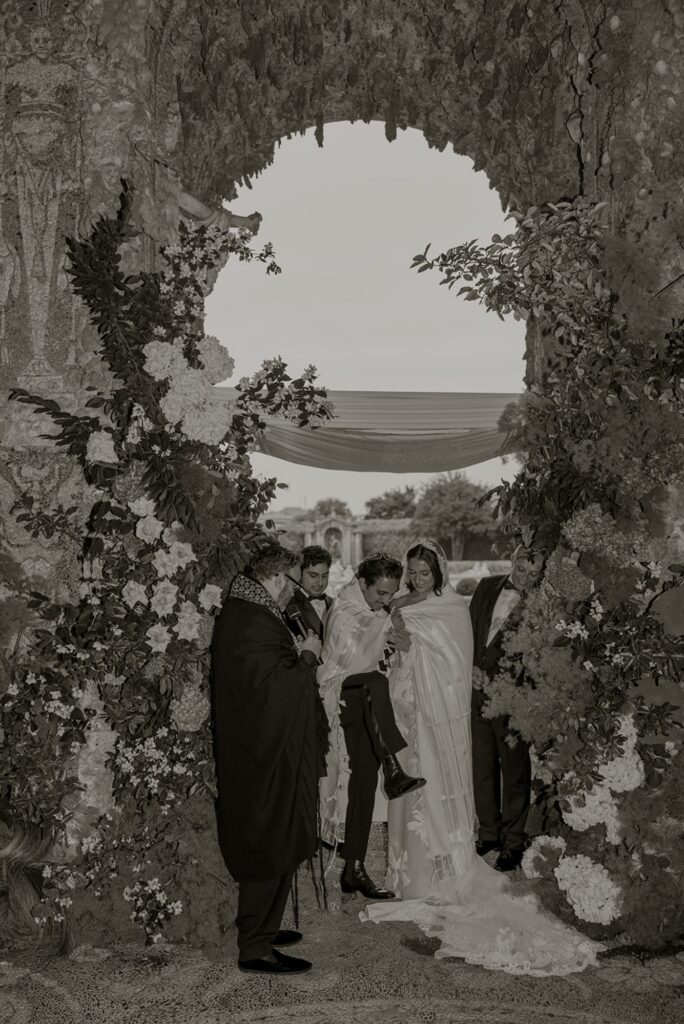
And there they stood, facing each other under an opening in the ceiling of stone above them. Light poured through, framing their silhouettes like statues cast in dusk. Lauren and Ariel exchanged vows while the last of the rain fell just beyond the cave. Then, pressing one hand to his kippah, Ariel lifted his foot and stamped down on the glass. It shattered, and everyone erupted.
Beneath all that ancient stone, something new began.

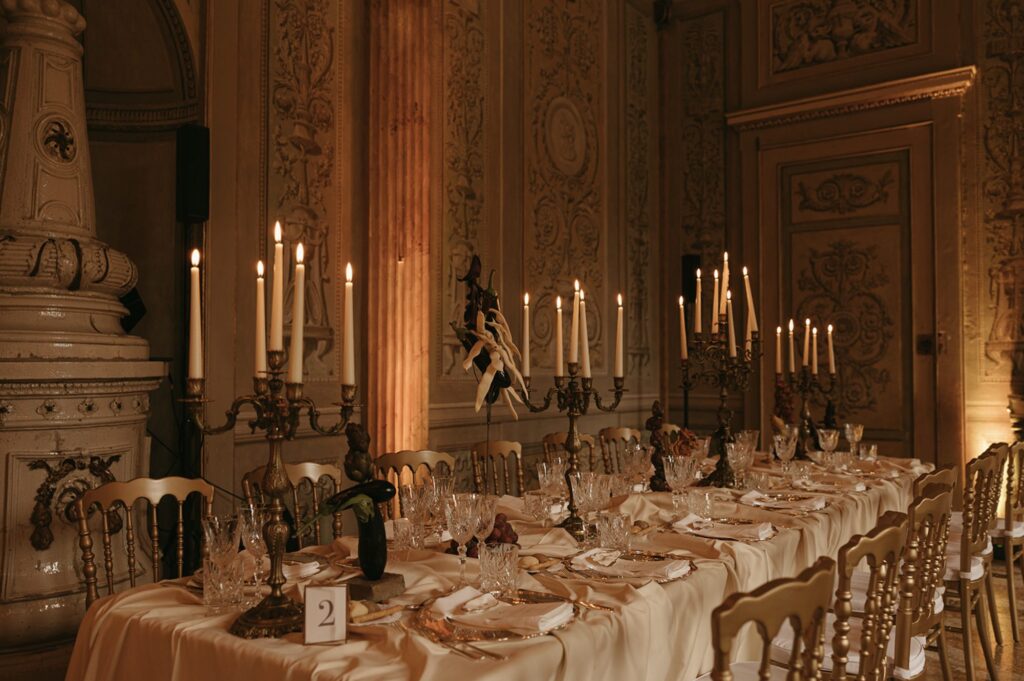
Back inside, dinner was served. Sculpted moldings lined the walls and antique mirrors hung between them. Long rectangular tables sat in symmetry, all dressed in satin and candlelight. Silver chargers gleamed beside crystal champagne glasses as grapes spilled down from bowls adorned with gold. Wheels of cheese wove between us, and one by one, we raised our glasses.
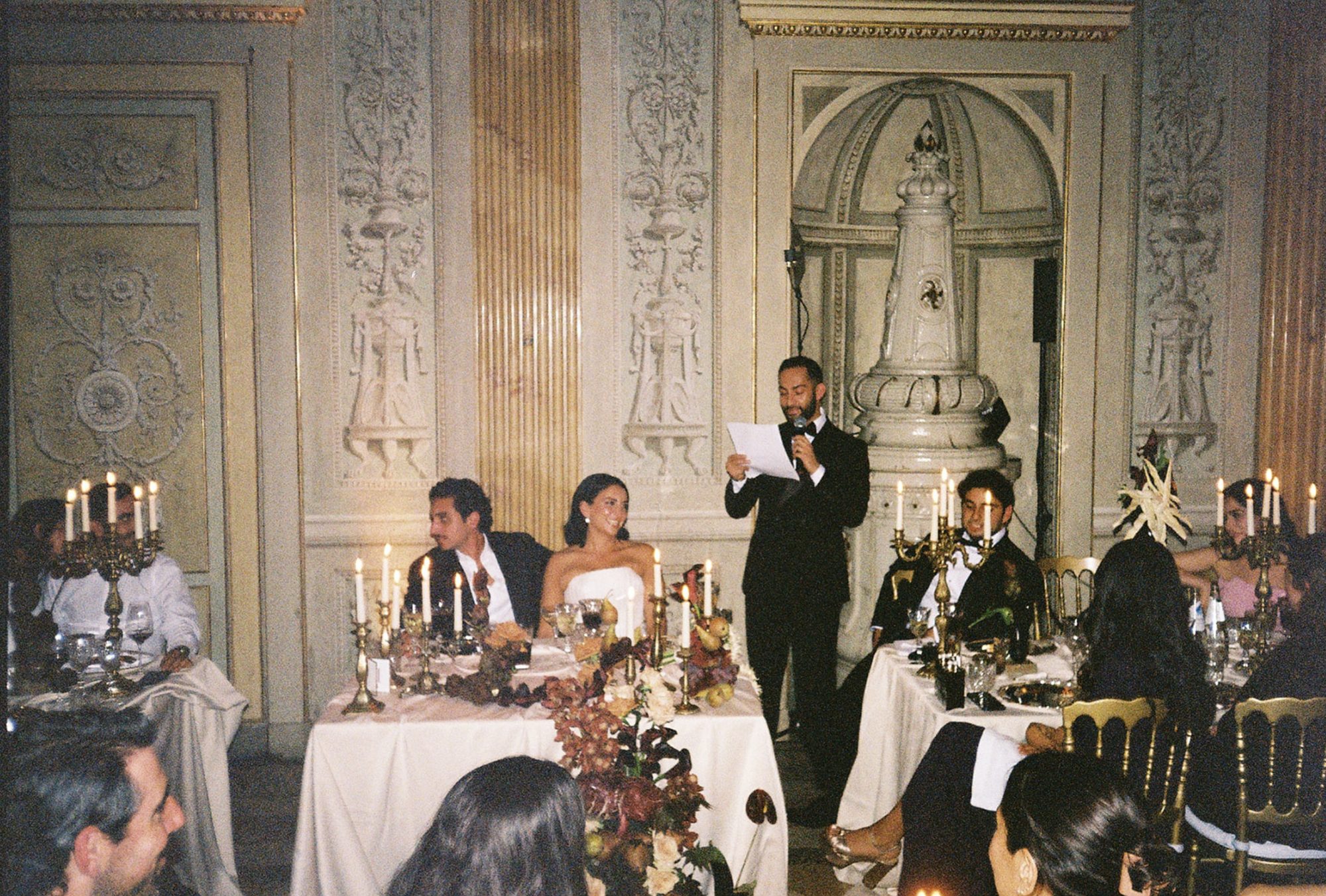
It was finally time for my toast. I shared stories about my childhood with Lauren — an era when we took swimming lessons together, covered each other in stickers, and demanded that her mom, Sholeh, take us to the market for cake mix so we could attempt to bake in their kitchen. She would smile, reach for her keys, and take us, as though it had been the plan all along.
I felt compelled to speak of Sholeh. Though she couldn’t be there in the way we once knew her, I knew she would still claim her place in the celebration. We raised our glasses to her, too — and her name moved through the room in memories and laughter.
Her presence remained — only its form had changed.
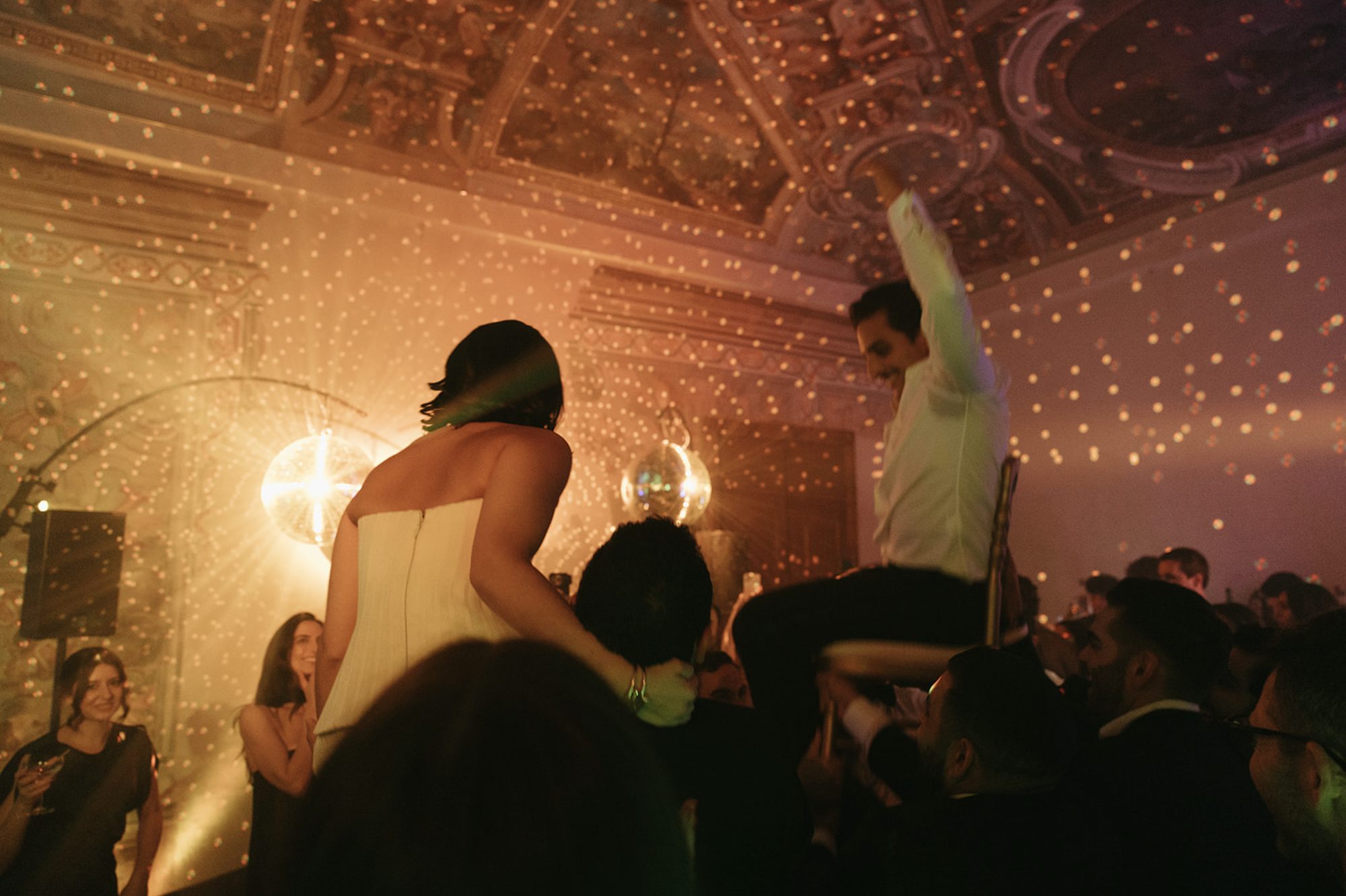
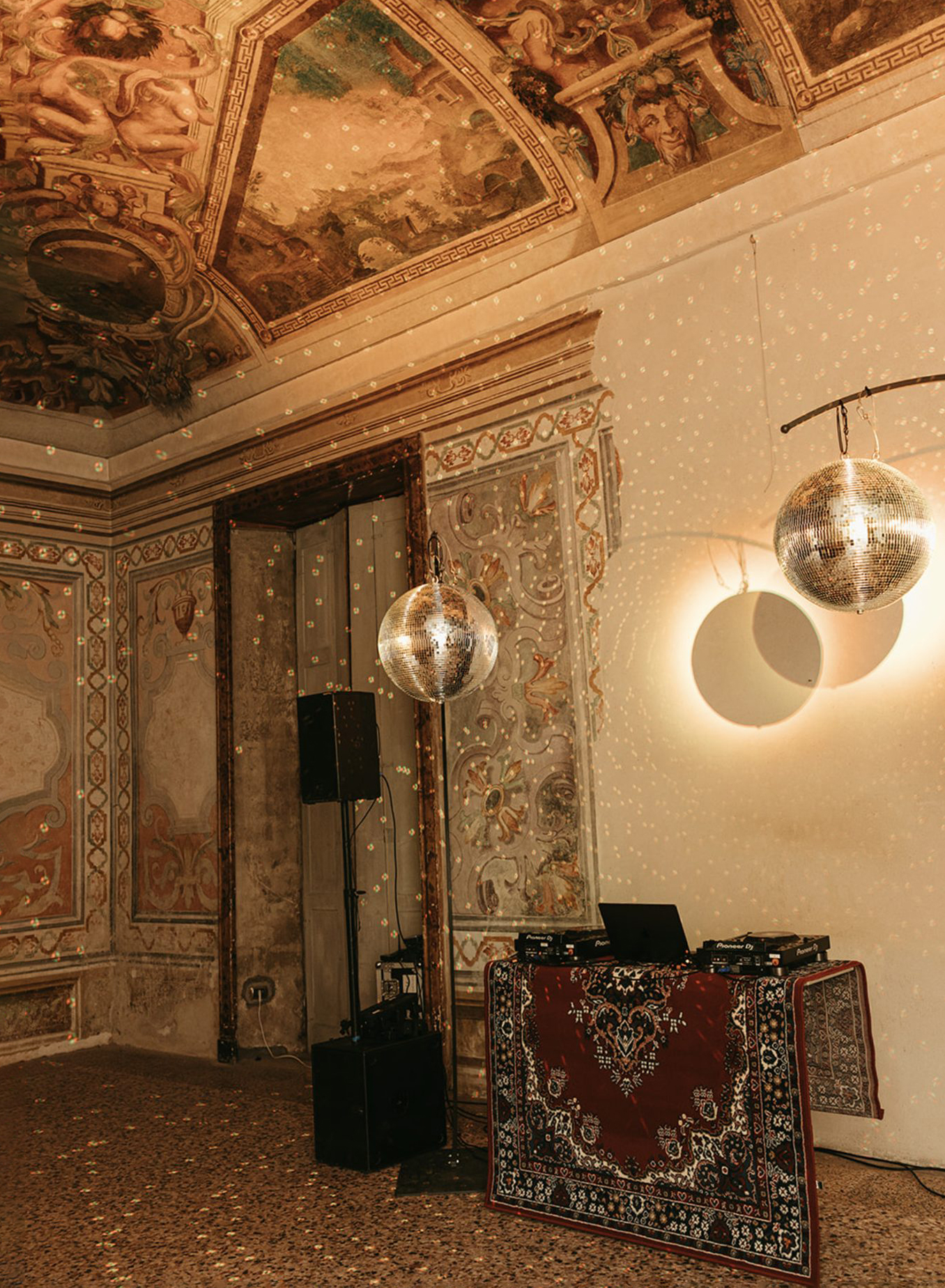
As the sky turned dark, we moved into the ballroom. Bright spotlights flickered across fading murals, casting color over their worn surfaces — and for a few hours, the centuries-old walls woke from their stillness and danced with us.
It was as if the hundred and change of us had surrendered our consciousness to the music, and the only eyes left open belonged to Lauren’s bouquet, silently bearing witness from a table in the corner.
The music in my mind receded, and I was back in Lauren and Ariel’s dining room, standing before the dried bouquet in the sunny calm of a Saturday afternoon — my spritz still in hand. Behind the glass, the orchids had gone still again — their browned petals holding the shape of a night I had just relived in color. And in the wake of my daydream, I saw that the frame held more than the bouquet; it held the wedding long after the celebration had ended.
Eventually, the sinkhole was filled and traffic returned to Sunset. The symphony of sports mode and steel resumed, but Dialog was still dark. No one knew when its doors would reopen. And yet, the conversation continued online. The café kept gathering people even in its absence.
I hoped it would reopen soon. But for now, Lauren and I would keep refilling our spritzes until we could drink juice again.
With my glass half full, I began to see that some things endure by changing shape.
Some things age. Some dry. Others wash away in the night. Bouquets surrender to the sun and live on behind glass. Childhood playmates find their soulmates. The baking aisle at the market becomes a wedding aisle in Italy. The people we love leave us and return through the stories that still make a room laugh. Sometimes the places we call home break open. Still, we go on.
And sometimes, when we are willing to see differently, what we cannot keep becomes art.
Framed behind glass, Lauren’s orchids had changed forever. And still, in a life beyond their bloom, there they were.