To me, Sundays aren’t just for rest — they’re for ritual. Coffee becomes less about survival and more about comfort. Robes turn to uniform, the house sighs with warmth, the bed a sanctuary of stillness where the world finds its calm outside the window.
Inside, over a steaming stove, butter melts. Eggs are cracked open — and so are we, opening ourselves to all of Sunday’s quiet ease. But sometimes, there’s a delicious thrill in disrupting its usual flow — in nudging the day out of its familiar rhythm and stepping out of the kitchen altogether.
When Mariam invited me out for a day of pickleball, I felt an unexpected urge to say yes. Through the iron gates and down the pebble driveway, she stood waiting — her ivory set glowing against the dark chestnut doors behind her. She greeted me with one hand, her racket in the other, and with a single wave, my solo Sunday opened to company.
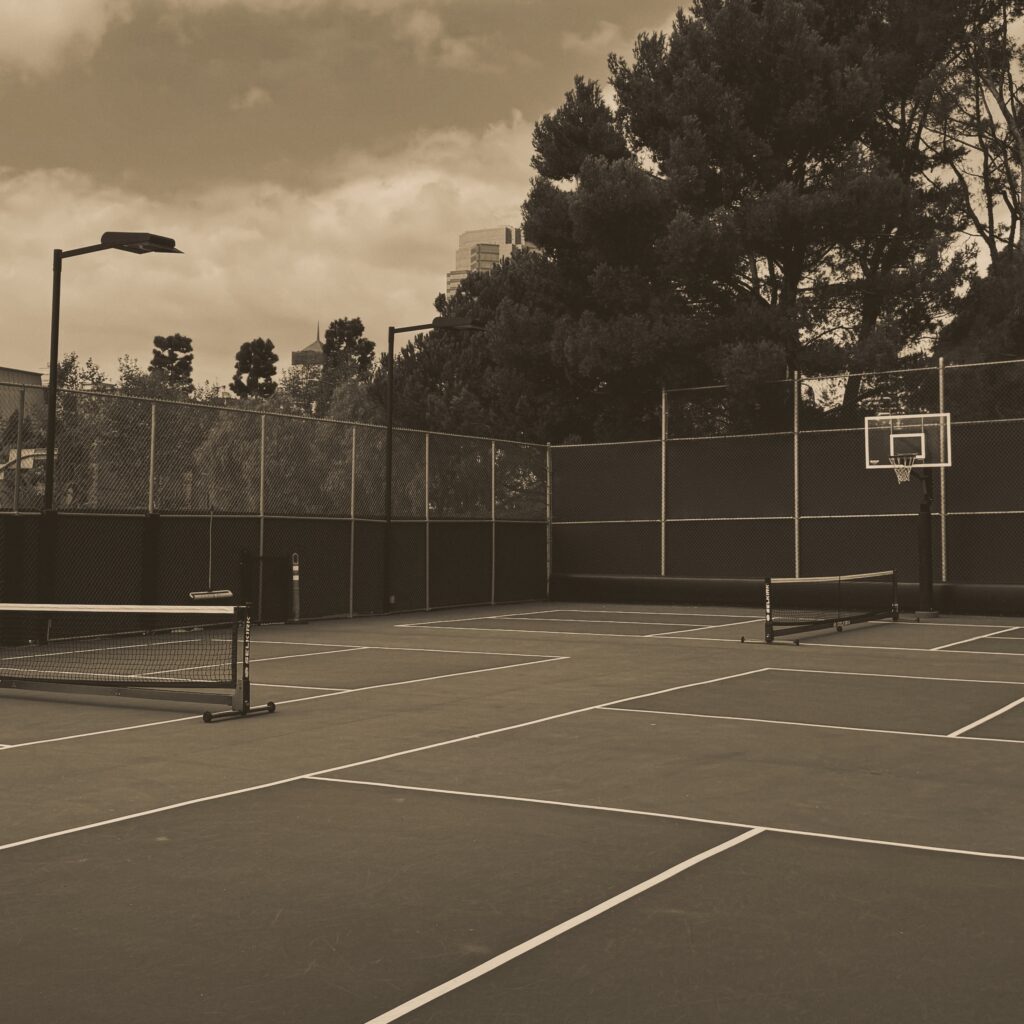
We toured the club, winding down the rolling olive hills toward the court. The air buzzed with sideline chatter and the thud of balls meeting the ground, a chorus of motion that made the court feel alive. White boundary lines sliced the surface into crisp shapes — and somewhere between the geometry of it all, we played.
Mariam walked me through the rules — the volleys, the serves, the soft hands required at the net — but the one that stayed with me was simple: don’t step into the Kitchen. The Kitchen is the slim stretch of the court just in front of the net — a subtle strip of painted green where you can’t cross the line and hit a ball out of the air. A boundary that governs the entire game.
“Chin up, chest open, racket ready,” Mariam called out. “It makes it easier to see what’s coming.”
Sweat rolled down my face, catching the breeze — warmth and coolness meeting on my skin. I found myself enjoying the rhythm of it all, learning how to move through the court with intention, placing myself with purpose.
The more we played, inching up toward the Kitchen line, the more I realized that sliver of the court is less about rules and more about restraint. You can hover at its edge, lean over it, even let your shadow slip across it — but you can’t rush inside. The Kitchen teaches presence — how to hold space, loosen your grip, stand tall, and return what life sends your way without losing your footing.
We must wait for the bounce — let the moment land before we step into it.
Maybe that’s just the way kitchens work — some teach us ease, some teach motion. And then there are the kitchens we return to, the ones brimming with turmeric that teach us tradition.
A few Sundays later, I found myself back in a kitchen I knew by heart — my mother’s. Copper pots rested on marble countertops like seasoned witnesses to her craft. I stood beside Haleh as she prepared for Thanksgiving, watching her move through Persian recipes she learned from her mother, her grandmother, her aunts — as if flavor were her third language.
Saffron bloomed in warm broth as she chopped herbs the way her hands were taught decades ago. And through her fingers, dishes that once traveled across oceans found their place on our table.
I’ve always loved my mother’s Thanksgivings, the way she folds our Persian flavors into the classic American spread — tahdig next to turkey, jeweled rice beside stuffing. Tradition, yes — but alive and evolving.
Perched on the counter, I watched as she pulled together the simplest ingredients — rice, carrots, green beans, a touch of cinnamon — to make polo havij o lubia, a Persian classic humble enough for any weeknight yet rooted in a lineage of women who stirred before her.
She moved instinctively, mixing sweetness with earth, color with fire. There was something almost sacred about it — as if the kitchen itself were breathing. And seeing her through the steam, I understood how a kitchen can be as much a place of memory as it is a place of becoming.
Just before the pot sealed, she slipped in her own addition: a touch of rosewater — her quiet way of making the old feel new.
Then, leaning toward the stove, Haleh lifted a small spoonful of the pomegranate stew to her lips. She stepped back from the steam, closed her eyes, and savored it with a slow, knowing grin.
“The spices are perfect,” Haleh murmured.
“How can you tell?” I asked.
She opened her eyes, almost amused by the simplicity of the question. “Because we waited,” she said. “We let the heat stay on long enough for the flavors to come together.”
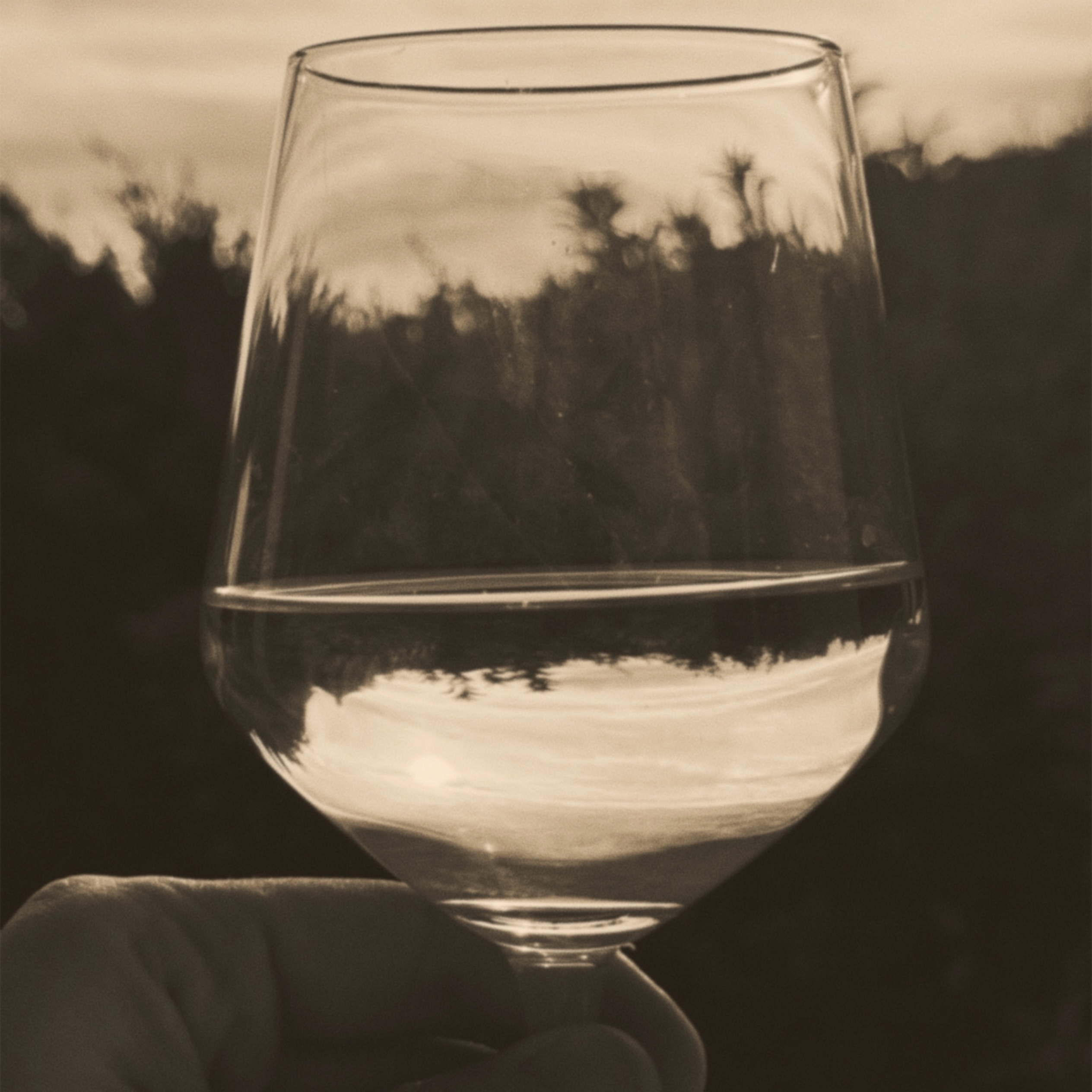
Beside the stove, the bottle of white waited in its own small pool of sunlight. She lifted her glass — an unspoken invitation — and I raised mine to meet it. The clink was faint, but the moment was full — a soft salute to the year behind us, and to the two of us standing steady in its afterglow.
In the weeks that followed, I kept thinking about life’s kitchens — the ones I’d stood in, the ones I’d stepped out of, the ones I was still learning how to move through. Each one asked something different of me, each one offering something back.
Perhaps we don’t learn everything in one room. We move between them — sometimes by choice, sometimes because life insists — each space teaching us in its own way. This year carried that lesson, revealing its truths in different turns: some rising slowly like a simmer, others striking us straight on.
I learned that strength isn’t the swing, it’s the stance — the decision to stay grounded when everything in you wants to lunge forward.
I learned that patience is its own kind of courage — one that doesn’t always demand action, only time.
I learned that you can’t rush the heat, no matter how badly you want the moment to arrive. (Some things need a slow burn before they make sense.)
I learned that softness isn’t weakness – sometimes it’s the faintest of fires that allows tenderness to rise.
I learned that sometimes a gentle shot finds the line more precisely than a hard one. Impact isn’t always made by force.
I learned that boundaries are beautiful.
I learned that growing doesn’t mean outgrowing your roots. They will always hold us as we change.
I learned that peace isn’t the absence of heat — it’s the ability to withstand it without burning.
I learned that presence — true presence — is its own kind of nourishment. The kind that requires attention, posture, breath.
I learned that life, like any recipe worth remembering, can’t be forced. We must linger long enough for the flavors to meet — to trust the mixing, the waiting, the slow rise of becoming.
I learned that feelings change form. That gratitude feels different depending on the day. That connection can surprise you. That moving forward can mean loving where you are.
And lastly, I learned that there is so much to savor.
They say “if you can’t take the heat, get out of the kitchen.” But this year showed me something more honest: if you can stay — if you can breathe through the steam, stay rooted in yourself and wait for what’s still forming — what’s yours eventually arrives. Not all at once, not all in one piece, but ultimately, it lands.
Because staying reshapes you. The heat doesn’t break you — it distills you. And in the end, that just might be the point.
Maybe staying isn’t about resisting heat — it’s about becoming someone who knows where to stand when the pressure rises. Someone who can meet the moment when it finally bounces your way. Someone who sees that true victory is simply presence.